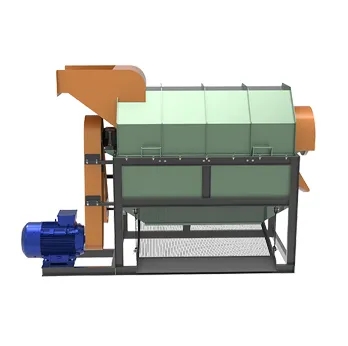
Fiber Cyclone vs Winnowing System: Which Is Better for Fiber and Nut Separation in Palm Oil Mills?

Table of Content [Hide]

    For fiber and nut separation immediately after palm oil pressing, a fiber cyclone is generally the more appropriate system. It is specifically designed to remove lightweight press fiber from heavier palm nuts before the nuts enter polishing and cracking equipment. A winnowing system is more commonly applied later in the kernel recovery process, especially for separating cracked palm kernels from shells.


    Therefore, these technologies should not always be treated as direct alternatives. In a well-designed palm oil mill, a fiber cyclone and a winnowing system can perform different separation duties within the same kernel recovery line.


    Fiber Cyclone vs Winnowing System: How Do They Differ?

    Both systems use airflow and differences in material properties, but their feed materials and process objectives are different.


    ComparisonFiber CycloneWinnowing System
    Typical process stageAfter pressing/cake breakingAfter nut cracking
    Main feedFiber and palm nutsKernel and shell mixture
    Main objectiveRemove fiber and recover clean nutsRecover kernels from shells
    Separation principlePneumatic airflow, gravity and cyclone actionControlled air velocity / aerodynamic classification
    Typical downstream equipmentNut polishing drum, ripple millKernel drying or secondary separation
    Best choice for fiber-nut separationYesNormally not the primary equipment


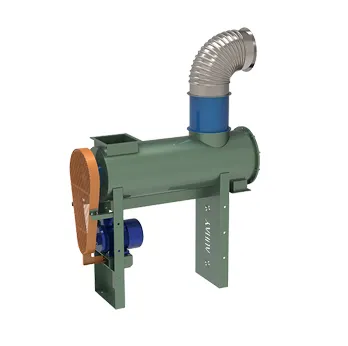
    After screw pressing, the press cake contains both fiber and nuts. The fiber cyclone removes the lighter fiber pneumatically, allowing the heavier nuts to continue toward the nut recovery section. YAHUA's fiber cyclone, for example, is specifically described as equipment for separating fiber and nuts by pneumatic/gravity methods.


    Winnowing equipment generally becomes more important after the nuts have been cracked. Research from the Malaysian Palm Oil Board describes multi-stage winnowing columns for dry separation of palm kernels from shells.


    Comparing Airflow, Separation Efficiency and Material Handling

    How does a fiber cyclone separate fiber from palm nuts?

    A fiber cyclone uses controlled suction to exploit the difference between lightweight fibrous material and heavier nuts.


    The mixture normally arrives from the cake breaker conveyor. Airflow lifts and transports the lighter fibers, while the heavier nuts separate from the air stream and continue to downstream processing. An airlock at the discharge point helps maintain stable system pressure while continuously removing separated material.


    Air velocity is critical. If suction is too low, excessive fiber remains with the nuts. If it is too high, valuable nuts may be carried into the fiber stream, increasing kernel losses.


    YAHUA's industrial fiber cyclone is specified with a 10 TPH capacity, 2,300 mm cyclone diameter, 40,000 m³/h air volume and centrifugal fan system, illustrating the airflow requirements involved in industrial-scale separation.


    How does a winnowing system work in a palm oil mill?

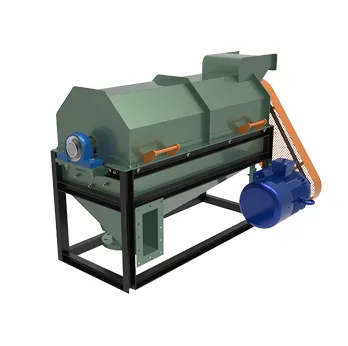
    Winnowing also relies on aerodynamic differences, but it usually processes material after nut cracking. Air is adjusted so that lighter shell fractions are separated from heavier kernel fractions.


    Multi-stage systems can progressively classify the cracked mixture because kernels and shells do not always separate perfectly in one air-separation stage. MPOB has developed four- and five-stage winnowing systems to improve dry kernel and shell recovery.


    Feed consistency is especially important. MPOB notes that effective dry separation benefits from properly cracked material with reasonably uniform particle sizes.


    How Fiber and Nut Separation Affects Palm Kernel Processing

    Effective fiber removal has a direct impact on the performance of the kernel recovery station.


    When excessive fiber remains with the nuts, it creates unnecessary loading on nut polishing, conveying and cracking equipment. Poor airflow control can also cause the opposite problem: nuts may leave with the fiber waste, reducing potential kernel recovery.


    A typical process sequence is:

    Pressing → Cake Breaker Conveyor → Fiber Cyclone → Nut Polishing → Nut Cracking → Winnowing / Kernel-Shell Separation → Kernel Drying


    This shows why the two technologies complement rather than replace each other.


    The fiber cyclone protects the front end of the kernel recovery process by separating fiber from nuts, while the winnowing system handles the more precise kernel-shell separation required after cracking.


    For mills targeting higher palm kernel recovery, optimizing both stages can be more valuable than simply installing a larger fan or additional separator.


    Which Separation System Fits Your Palm Oil Mill?

    Choose a fiber cyclone when your main challenge is:

    • Excess fiber mixed with nuts after pressing

    • High nut losses in discharged press fiber

    • Unstable depericarping performance

    • Excessive fiber entering nut polishing or cracking equipment

    • Upgrading the press cake separation section


    Choose or upgrade a winnowing system when the main problem occurs after nut cracking, such as excessive shell contamination in recovered kernels or excessive kernel loss in the shell fraction.


    For a new palm oil mill, the more practical engineering approach is often to use both systems at their correct process stages rather than deciding between them as mutually exclusive equipment.


    Sizing should consider mill capacity, press cake quantity, fiber moisture, nut size distribution, required air velocity, duct resistance and acceptable kernel loss. A fiber cyclone that is too small—or a fan system that is poorly balanced—can become a bottleneck even if its nominal capacity appears sufficient.


    FAQs About Fiber Cyclones

    What is a fiber cyclone used for in a palm oil mill?

    A fiber cyclone separates lightweight fiber from heavier palm nuts after pressing, normally within the depericarping or kernel recovery station.


    Where is the fiber cyclone installed?

    It is typically installed after the cake breaker conveyor and before nut polishing and cracking equipment. This allows most loose fiber to be removed before the nuts enter downstream kernel processing.


    Why is airflow important in a fiber cyclone?

    Airflow determines the separation point between fiber and nuts. Insufficient suction leaves fiber with the nuts, while excessive suction can increase nut carryover into the fiber stream. Stable airflow is therefore essential for controlling separation efficiency and material losses.


    What is the purpose of an airlock in a fiber cyclone?

    The rotary airlock allows separated material to discharge continuously while limiting air leakage and helping maintain stable pressure within the pneumatic system.


    Can a winnowing system replace a fiber cyclone?

    Usually not for the primary fiber-nut separation duty. Winnowing systems in palm kernel recovery are mainly associated with separating kernel from shell after cracking, whereas a fiber cyclone is specifically intended for fiber and nut separation before cracking.


    For mills experiencing fiber contamination or nut losses immediately after pressing, a correctly sized and balanced fiber cyclone should be the priority. Where kernel-shell purity after cracking is the concern, the winnowing section should be optimized instead. In complete palm kernel recovery lines, combining effective fiber separation with properly designed dry winnowing provides a stronger overall solution than relying on either stage alone.

    Mr. Lu
    Mr. Lu

    A Senior Palm Oil Process Engineer who has been dedicated to the palm oil industry since 2005. He possesses rich project experience, overseeing the complete lifecycle from design and manufacturing to installation and commissioning at client sites around the world. His portfolio is strongest in Indonesia and Malaysia. Drawing on his deep expertise, he continually pioneers new processes focused on maximizing oil yield and minimizing equipment loss, ensuring he remains at the forefront of the field.

    References
    We use cookies to offer you a better browsing experience, analyze site traffic and personalize content. Part of the tracking is necessary to ensure SEO effectiveness,
    By using this site, you agree to our use of cookies. Visit our cookie policy to learn more.
    Reject Accept