Phone:
+86-13598092101
Dec 23, 2025

 Vertical Sterilizer Tank
 Sterilizer Hydraulic Door
 Horizontal Type Sterilizer Tank
 Transfer Carriage
 Palm Fruit Cage
 Tippler
 Palm Fruit Twin Screw Press
 Palm Kernel Expeller
 Empty Palm Fruit Bunches Press
 Thresher Drum
 Digester
 Palm Nut Crusher(Ripple Mill)
 Nut Polishing Drum
 Palm Kernel & Shell Separate Winnowing System
 Palm Kernel & Shell Separate Hydraulic System
 Clay Bath
 Air Lock
 Nut Grading Screen
 Vertical Oil Clarifier Setting Tank With Stirrer
 Palm Kernel Dryer
 Fiber Cyclone
 Scraper Conveyor
 Screw Conveyor
 Bucket Elevator
 Back Pressure Vessel
 Palm Kernel Storage Bin
 Palm Nut Hopper
 MBR Water Treatment System
 Hard Bunch Shredder
 Double Deck Circular Vibrating Screen
 Pressure Leaf Filter
 Palm Shell & Kernel Caly Bath Seperator
Palm Kernel Expeller
Palm Kernel & Shell Separate Winnowing System
Palm Kernel & Shell Separate Hydraulic System
Nut Grading Screen
Palm Kernel Dryer
Bucket Elevator
Palm Kernel Storage Bin
Palm Nut Hopper
Pressure Leaf Filter
Palm Shell & Kernel Caly Bath Seperator
Palm Kernel Expeller
Palm Kernel & Shell Separate Winnowing System
Palm Kernel & Shell Separate Hydraulic System
Nut Grading Screen
Palm Kernel Dryer
Bucket Elevator
Palm Kernel Storage Bin
Palm Nut Hopper
Pressure Leaf Filter
 Extruder
 Process Water Tank
 Condensate Water Tank
 Ring-Type Extractor
 Vertical Extraction Unit
 Horizontal (Plate Chain) Extraction Unit
 Desolventizer DTDC
 Solvent Evaporator for Mixed Oil Extraction
 Vibrating Cleaning Screen
 Submerged Arc Scraper Conveyor
Vertical Sterilizer Tank
Submerged Arc Scraper Conveyor
Vertical Sterilizer Tank
 Membrane Press Filter
 Degassing Tower
 Deodorization Tank
 Fatty Acid Distillation Tower
 Fatty Acid Heavy & Light Phase Distillation Column
 Sweet Water Setting Separation Tank
 Foam Trap
 Degumming Tank
 Decolorization Tank
Process Water Tank
Condensate Water Tank
Decolorization Tank
Process Water Tank
Condensate Water Tank
 Hydrolysis Tower
 Tubular Heater
 Fatty Acid Heater
 Atmospheric Leg Pool
 Fatty Acid Flash Separation Tank
Crystallization Tank
Fatty Acid Flash Separation Tank
Crystallization Tank
 Shell and Tube Heat Ex-changer Vessels
 Sweet Water Flash Separation Tank
 Glycerin Evaporator
 Glycerol Residue Stripper
 Crude Glycerol Heater
 Glycerol Gas Condenser
 Glycerin Buffer Tank
 Glycerin Distillation Tower
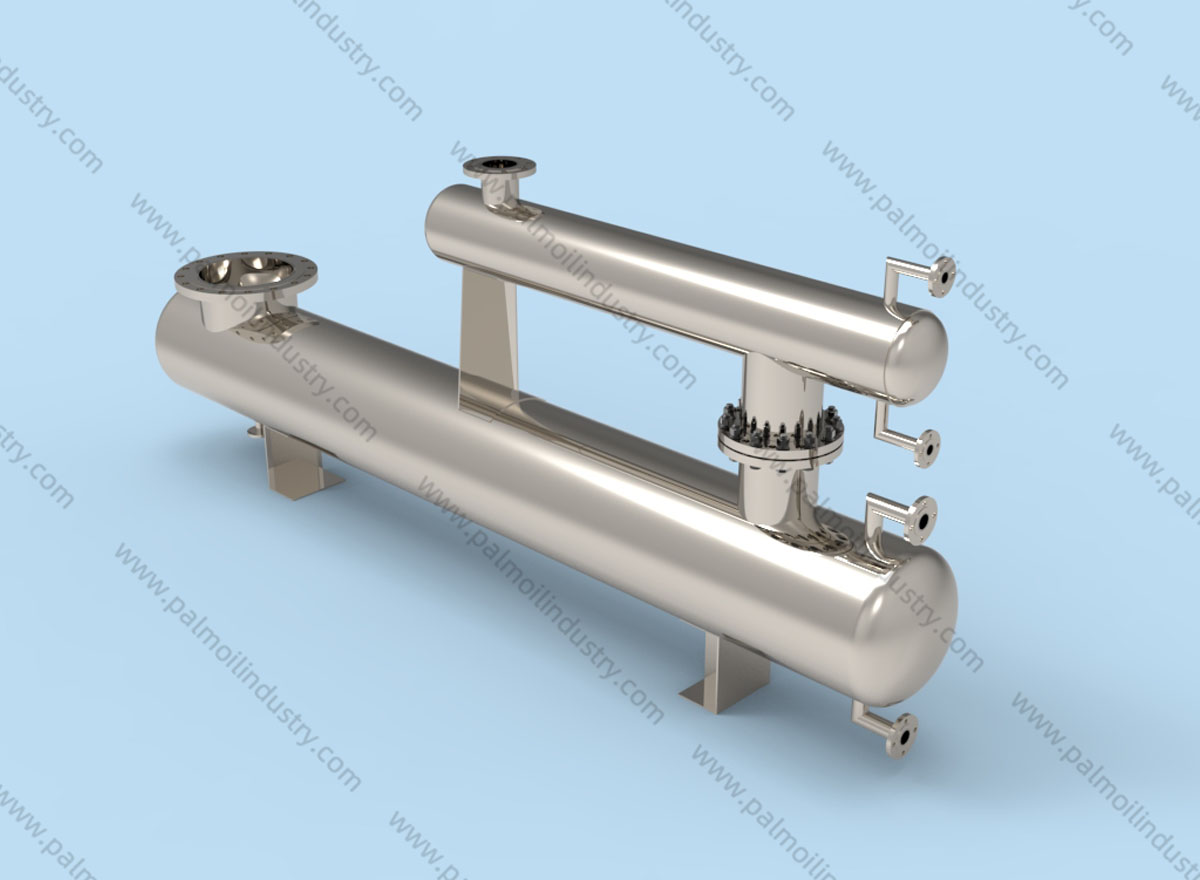
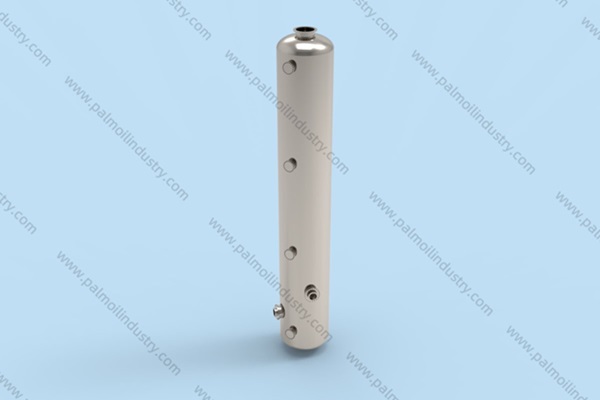
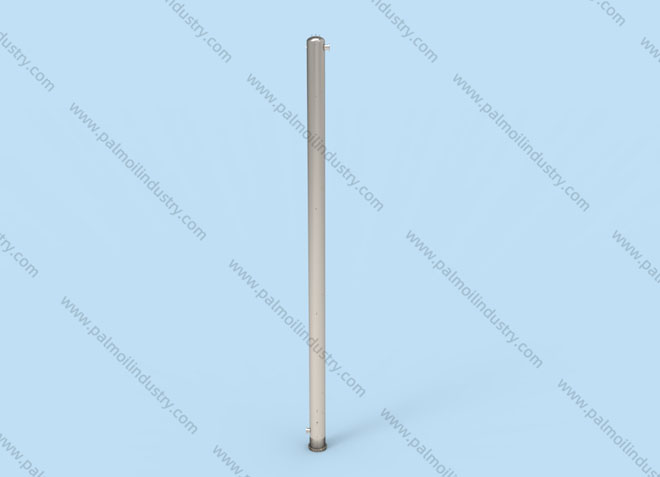
The Glycerol Gas Condenser is a specialized piece of equipment designed to condense glycerol gas into liquid form. This process is essential in various industrial applications where glycerol recovery and purification are required, ensuring efficient resource utilization and environmental protection.
| Equipment Name | Glycerol Gas Condenser |
| Working Method | Condensate the Glycerin Gas to Liquid |
| Material | 00Cr17Ni14Mo2 |
| Media | Glycerin Gas, Recycle Water |
| Workpressure | -0.1Mpa |
| Jacket Pressure | 0.5Mpa |
| Working Temperature | 200℃ |
| Jacket Temperature | 45-70℃ |
| Equipment Size | According Capacity |
| Production Stander | GB150-1998 《Shell and Tube Heat Ex-changer Vessels》 |
The Glycerol Gas Condenser operates by cooling glycerol gas using a heat exchange medium, typically recycle water. The glycerol gas enters the condenser and flows through a series of tubes or coils. Recycle water circulates around these tubes, absorbing the heat from the glycerol gas and causing it to condense into liquid. This liquid glycerol can then be collected and reused in the production process. The entire operation takes place in a vacuum environment to optimize the condensation process.
Constructed from 00Cr17Ni14Mo2 stainless steel, the Glycerol Gas Condenser combines excellent corrosion resistance with high - temperature strength. This material choice ensures that the condenser can withstand the rigorous conditions of continuous operation, including exposure to high - temperature glycerol gas and varying pressures.
Working Method: Condenses glycerol gas into liquid form using a heat exchange process with recycle water.
Material: Made from 00Cr17Ni14Mo2 stainless steel.
Media: Glycerin gas and recycle water.
Work Pressure: -0.1 MPa.
Jacket Pressure: 0.5 MPa.
Working Temperature: 200℃ .
Jacket Temperature: 45 - 70℃ .
Equipment Size: Determined based on production capacity.
Production Standard: Complies with GB150-1998 《Shell and Tube Heat Exchanger Vessels》.
Efficient Condensation: The heat exchange process efficiently converts glycerol gas into liquid, ensuring high recovery rates.
Durable Construction: The 00Cr17Ni14Mo2 stainless steel material ensures long - term reliability and minimal maintenance requirements.
Stable Operation: The condenser is designed for stable and continuous operation, with precise control of temperature and pressure parameters.
Energy - Efficient Operation: The design allows for efficient heat transfer, minimizing energy consumption during the condensation process.
Environmental Protection: By condensing and recovering glycerol gas, the condenser helps reduce emissions and environmental impact.
The Glycerol Gas Condenser is widely used in industries such as biodiesel production, chemical manufacturing, and food processing. It plays a crucial role in processes where glycerol gas recovery is necessary, helping to improve resource efficiency and reduce production costs. Its design and specifications make it suitable for integration into both new and existing production facilities.