Phone:
+86-13598092101
Dec 23, 2025

 Vertical Sterilizer Tank
 Sterilizer Hydraulic Door
 Horizontal Type Sterilizer Tank
 Transfer Carriage
 Palm Fruit Cage
 Tippler
 Palm Fruit Twin Screw Press
 Palm Kernel Expeller
 Empty Palm Fruit Bunches Press
 Thresher Drum
 Digester
 Palm Nut Crusher(Ripple Mill)
 Nut Polishing Drum
 Palm Kernel & Shell Separate Winnowing System
 Palm Kernel & Shell Separate Hydraulic System
 Clay Bath
 Air Lock
 Nut Grading Screen
 Vertical Oil Clarifier Setting Tank With Stirrer
 Palm Kernel Dryer
 Fiber Cyclone
 Scraper Conveyor
 Screw Conveyor
 Bucket Elevator
 Back Pressure Vessel
 Palm Kernel Storage Bin
 Palm Nut Hopper
 MBR Water Treatment System
 Hard Bunch Shredder
 Double Deck Circular Vibrating Screen
 Pressure Leaf Filter
 Palm Shell & Kernel Caly Bath Seperator
Palm Kernel Expeller
Palm Kernel & Shell Separate Winnowing System
Palm Kernel & Shell Separate Hydraulic System
Nut Grading Screen
Palm Kernel Dryer
Bucket Elevator
Palm Kernel Storage Bin
Palm Nut Hopper
Pressure Leaf Filter
Palm Shell & Kernel Caly Bath Seperator
Palm Kernel Expeller
Palm Kernel & Shell Separate Winnowing System
Palm Kernel & Shell Separate Hydraulic System
Nut Grading Screen
Palm Kernel Dryer
Bucket Elevator
Palm Kernel Storage Bin
Palm Nut Hopper
Pressure Leaf Filter
 Extruder
 Process Water Tank
 Condensate Water Tank
 Ring-Type Extractor
 Vertical Extraction Unit
 Horizontal (Plate Chain) Extraction Unit
 Desolventizer DTDC
 Solvent Evaporator for Mixed Oil Extraction
 Vibrating Cleaning Screen
 Submerged Arc Scraper Conveyor
Vertical Sterilizer Tank
Submerged Arc Scraper Conveyor
Vertical Sterilizer Tank
 Membrane Press Filter
 Degassing Tower
 Deodorization Tank
 Fatty Acid Distillation Tower
 Fatty Acid Heavy & Light Phase Distillation Column
 Sweet Water Setting Separation Tank
 Foam Trap
 Degumming Tank
 Decolorization Tank
Process Water Tank
Condensate Water Tank
Decolorization Tank
Process Water Tank
Condensate Water Tank
 Hydrolysis Tower
 Tubular Heater
 Fatty Acid Heater
 Atmospheric Leg Pool
 Fatty Acid Flash Separation Tank
Crystallization Tank
Fatty Acid Flash Separation Tank
Crystallization Tank
 Shell and Tube Heat Ex-changer Vessels
 Sweet Water Flash Separation Tank
 Glycerin Evaporator
 Glycerol Residue Stripper
 Crude Glycerol Heater
 Glycerol Gas Condenser
 Glycerin Buffer Tank
 Glycerin Distillation Tower
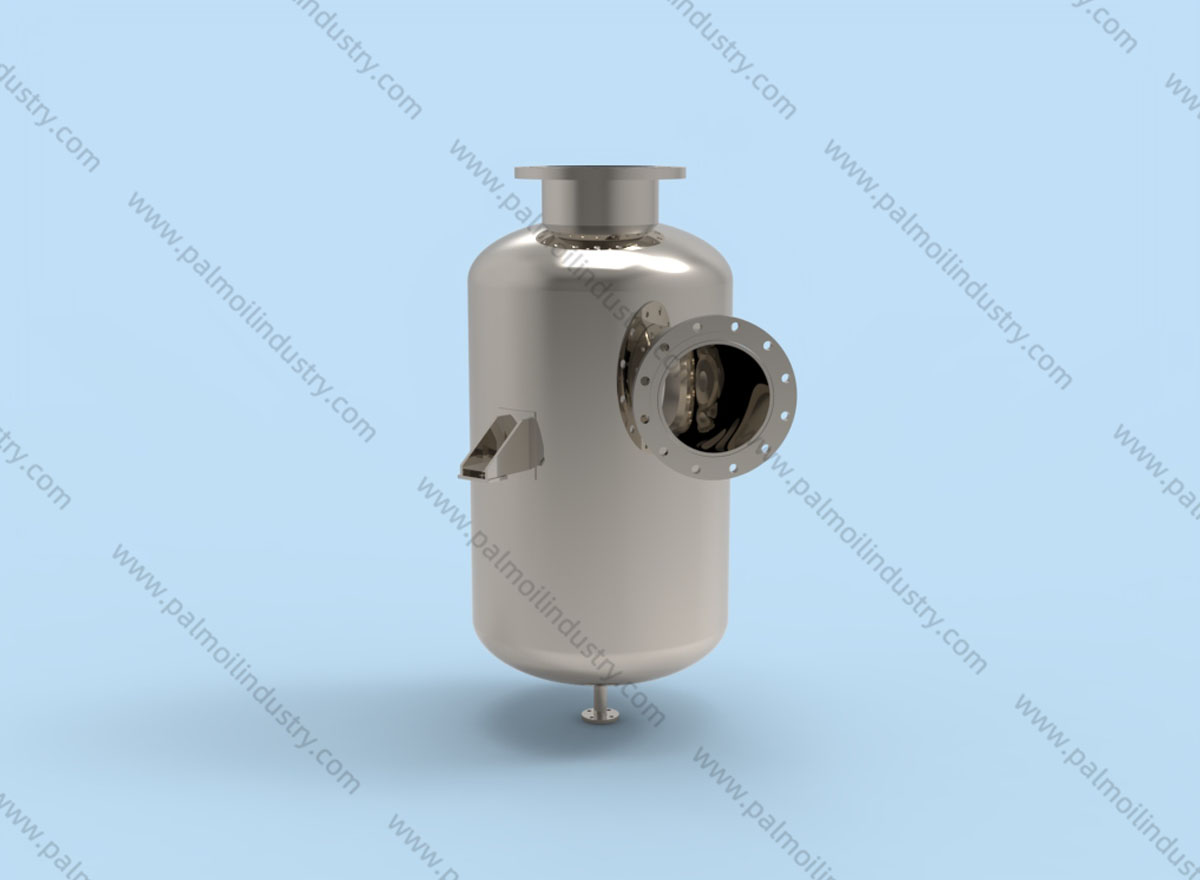
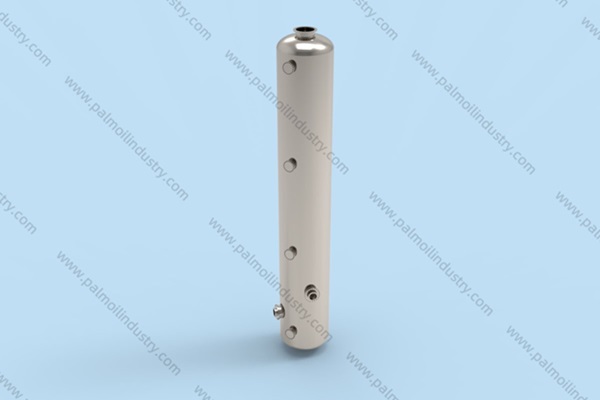
The Foam Trap is a specialized piece of equipment designed for the collection and separation of glycerin top foam. It is an essential component in processes involving crude glycerin, ensuring the efficient removal of foam to maintain product quality and process efficiency.
| Equipment Name | Foam Trap |
| Working Method | Collect and Separate the Glycerin Top Foam |
| Material | 0Cr18Ni9 |
| Media | Crude Glycerin, Steam |
| Workpressure | -0.1Mpa |
| Working Temperature | 110℃ |
| Equipment Size | According Capacity |
| Production Standard | GB150-1998 《Steel Pressure Vessels》 |
The Foam Trap operates by collecting the foam that forms on the surface of crude glycerin. The foam, which is less dense than the glycerin, is separated and removed from the system. This process prevents the foam from being carried over into subsequent processing stages, where it could potentially cause operational issues or affect the quality of the final product.
Constructed from 0Cr18Ni9 stainless steel, the Foam Trap combines excellent corrosion resistance with durability. This material choice ensures that the Foam Trap can withstand the conditions typically encountered in crude glycerin processing, including exposure to steam and varying temperatures.
Working Method: Collects and separates glycerin top foam to prevent carryover into subsequent processing stages.
Material: 0Cr18Ni9 stainless steel, ensuring durability and corrosion resistance.
Media: Crude glycerin and steam.
Work Pressure: -0.1 MPa.
Working Temperature: 110℃ .
Equipment Size: Determined based on required production capacity.
Production Standard: Complies with GB150-1998 《Steel Pressure Vessels》.
Efficient Foam Separation: Effectively removes foam from crude glycerin, maintaining product quality and process efficiency.
Durable and Corrosion-Resistant: The 0Cr18Ni9 stainless steel construction ensures long-term reliability and minimal maintenance.
Stable Operation: Designed to operate stably under specified conditions, ensuring consistent performance.
Energy Efficient: The design allows for efficient use of steam, minimizing energy consumption.
The Foam Trap is widely used in industries involved in the processing of crude glycerin, such as biodiesel production and chemical manufacturing. It is typically installed in systems where the separation of foam from crude glycerin is necessary to ensure smooth and efficient operations. By incorporating this equipment, facilities can enhance their overall efficiency and product quality.